Baking Scales: What Matters Before You Buy
By Love Coma Cakes Editorial · April 5, 2026 journal issue · Published October 10, 2026
Compare kitchen scales by readability, tare, capacity and everyday usability rather than unnecessary features.
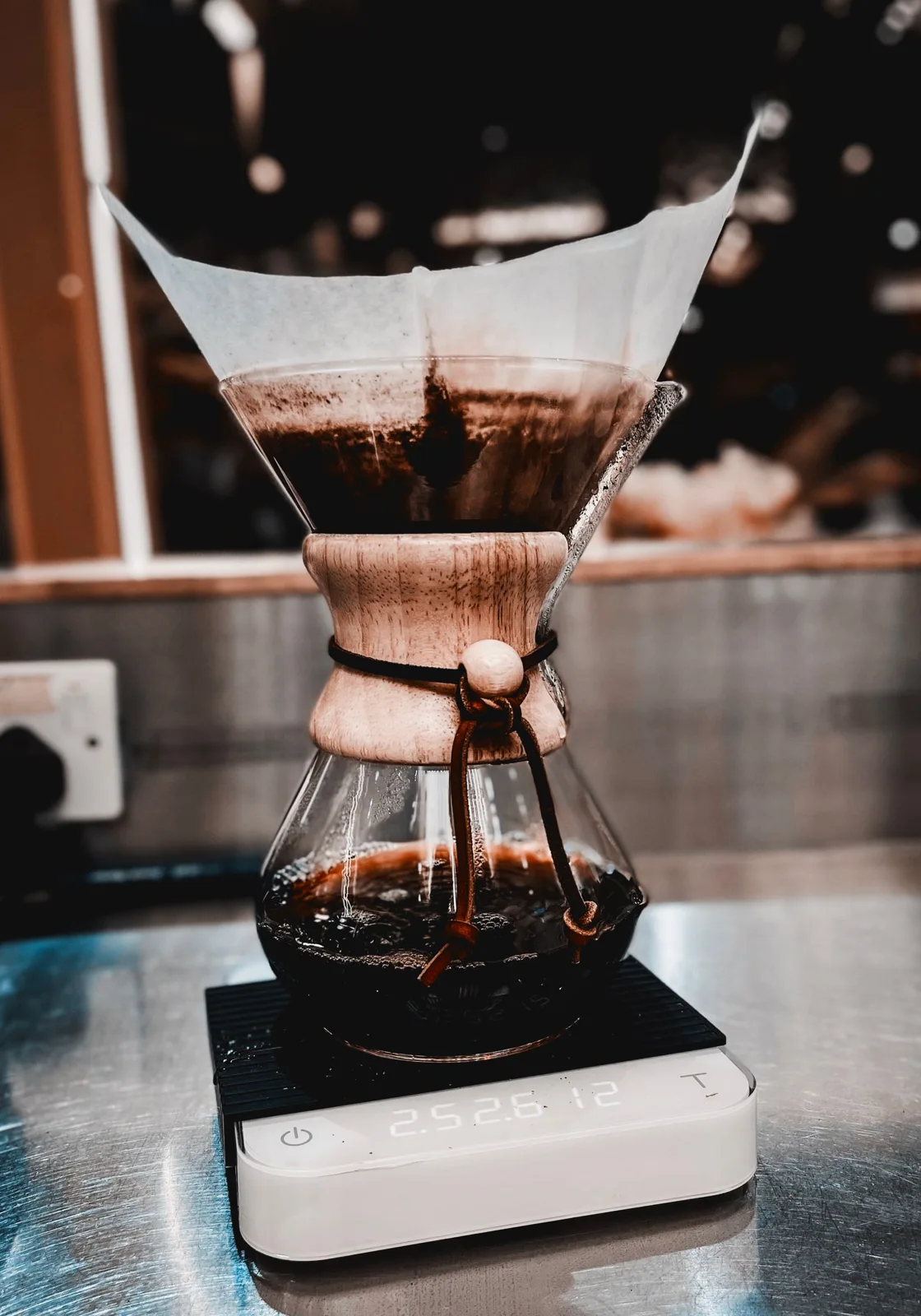
Illustrative photography by Swarup Sarkar / Pexels. Images show editorial inspiration, rather than a product or recipe test.
A useful baking scale should make measuring straightforward in your own kitchen. The display needs to remain visible beneath your bowl, the controls should make sense, and the capacity must cover the bowl and ingredients together. These details matter more than a long feature list. For someone moving from occasional baking to a regular weekend cake, a well-chosen scale can support repeatable measuring without taking much cupboard space.
Our buying advice is research-led. Links may take you to retailers; any paid relationship is identified beside the link. See our affiliate disclosure.
Begin with the recipes you use
Look at whether your preferred recipes specify weights, volume measurements or both. Use the measurement system the recipe provides rather than inventing ingredient conversions. Different ingredients occupy volume differently, so a scale’s unit switch does not automatically convert a cup of flour into an appropriate weight. Follow the recipe author’s stated quantities and method.
Consider the smallest and largest amounts you need to measure. A general kitchen scale may suit flour and sugar but may not be designed for tiny quantities. Check stated resolution, minimum load and manufacturer guidance. Do not mistake a display that shows small increments for independent proof of accuracy across every amount.
| Feature | Why it matters at home | What to inspect |
|---|---|---|
| Clear display | Your bowl may cover the platform | Visibility with a real bowl in place |
| Tare function | Allows sequential additions | Button access and behavior |
| Suitable capacity | Bowl weight counts toward the load | Maximum load and overload guidance |
| Unit selection | Recipes may use different units | Available units and easy switching |
| Manageable power supply | Batteries need replacement or charging | Battery type and included information |
Test the bowl-and-display relationship
Measure the base of your usual mixing bowl and compare it with the platform. A large bowl can overhang a compact scale enough to hide the display or buttons. Online product photographs often use a small bowl that makes the scale look easier to read than it may be with your equipment. Look for platform dimensions and overall layout.
The scale should sit on a stable, level surface during use. Make sure there is room for the bowl without touching a wall, another utensil or the counter edge. Contact with surrounding objects can interfere with weighing. Avoid balancing a bowl on an improvised stack simply to expose the screen unless the manufacturer explicitly describes a suitable method.
Understand tare and capacity together
Tare lets you account for the container before weighing ingredients, or reset the display between additions. It does not usually remove the bowl’s physical weight from the appliance’s maximum load. Check the manual so you understand what the device permits. A heavy bowl plus several ingredients can reach the limit even when the display shows only the latest addition.
Write down a recipe’s quantities before using sequential tare, or keep the recipe clearly visible. If you reset after each ingredient, you may not be able to reconstruct the total if interrupted. Add ingredients slowly as the target approaches. A scale measures what is present; it cannot rescue an accidental large pour without additional handling.
Think about pauses and interruptions
An automatic shutoff can preserve batteries, but a short timeout may be inconvenient when ingredients take time to retrieve. Check whether the manufacturer publishes the timing or allows adjustment. This is especially relevant if you use sequential additions and pause between them. Do not assume every scale remembers a previous reading after powering off.
Consider control design as well. Touch controls may be convenient but should remain easy to use with your normal baking setup. Physical buttons should be accessible when a bowl is in place. If possible, read the manual before purchasing to see how the unit starts, tares, changes units and signals a low battery or overload.
Choose cleaning and storage realistically
Look for a surface you can wipe according to its instructions, with few awkward recesses around the weighing area. Electronic kitchen equipment should not automatically be submerged or placed in a dishwasher. Follow the manufacturer’s cleaning guidance and keep water away from openings unless the product explicitly permits otherwise.
Decide whether the scale will lie in a drawer, stand in a cupboard or stay on the counter. Check instructions about storage and placing weight on it. A slim design is useful only if it can be stored without other tools pressing on the platform. Keep the manual or a saved official copy so care details remain available after packaging is discarded.
Spend on useful clarity
For ordinary baking, connected apps, nutrition databases and elaborate modes may add little value. Pay attention first to readable measurements, appropriate range, practical controls and clear support information. Verify current warranty and return terms from the seller and manufacturer. Do not infer long-term reliability from an attractive finish or an unsupported star rating.
If your existing scale already meets those needs, replacement may be unnecessary. Improve its setup by clearing a stable area and keeping the right bowl nearby. For equipment that shares the same cupboard, read the weekend baking cupboard. A tool is easier to use consistently when it is easy to find and put away.
Frequently asked questions
Does a scale replace measuring spoons?
Not automatically. Small amounts may be below the scale’s intended useful range, and recipes may specify spoons for them. Follow the recipe and check the scale’s limits rather than assuming one tool covers everything.
Should I buy a very high-capacity model?
Choose capacity for your bowl and realistic recipes. A higher limit is useful only if the device also meets your measuring needs, fits the space and remains easy to read.
Can I check accuracy with household objects?
Random household objects are not reliable reference weights. Follow any manufacturer-provided check or calibration procedure and contact its support if readings seem inconsistent. For a practical project using careful portioning, see small-batch cookie night and browse Baking.
This story belongs to our April 2026 editorial issue. This edition was published and reviewed on October 10, 2026. Our guidance is based on editorial research and practical planning, not an undisclosed hands-on product test.