A Better Setup for Decorating a Simple Cake
By Love Coma Cakes Editorial · April 1, 2026 journal issue · Published October 10, 2026
Build a restrained cake-decorating setup around a stable surface, useful spatula and realistic finishing plan.
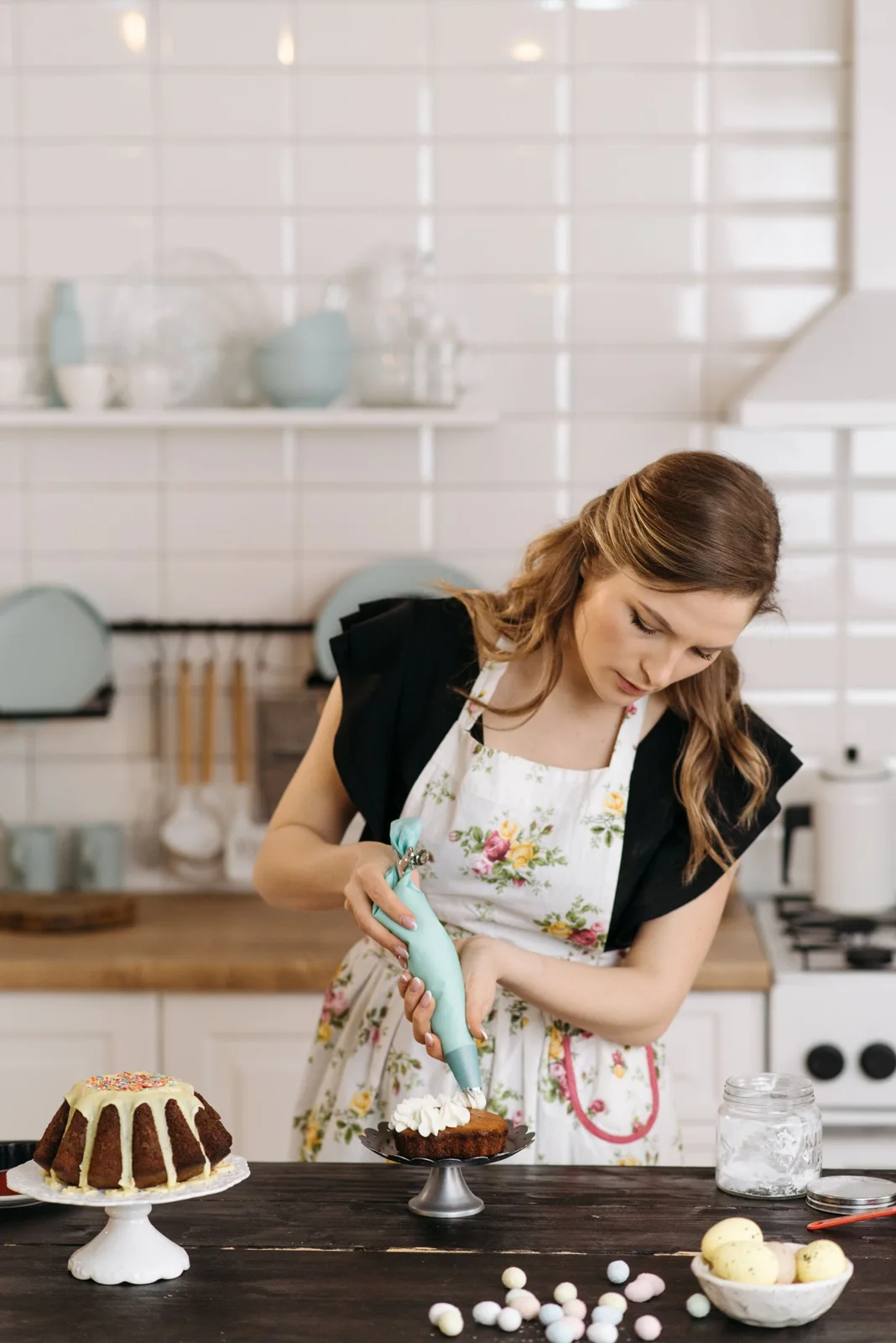
Illustrative photography by Pavel Danilyuk / Pexels. Images show editorial inspiration, rather than a product or recipe test.
A simple cake can look considered without a box of specialized tools. The most useful starting point is a stable cake, a clear work area and one finishing idea that suits the occasion. For a home baker preparing dessert after a busy week, a soft swirl of topping may be more appropriate than learning several piping techniques at once. Choose a recipe with clear decorating and storage instructions, then build your setup around that method.
Our buying advice is research-led. Links may take you to retailers; any paid relationship is identified beside the link. See our affiliate disclosure.
Start with the finished cake’s destination
Decide where the cake will be served and whether it must travel. A tall finish might not fit your carrier or refrigerator. A low decoration that can tolerate ordinary handling may make more sense for a journey. Follow food-safety and storage guidance for the selected topping; appearance does not determine whether it can wait at room temperature.
Measure the serving plate, cake board and container before decorating. Place the plate on a stable surface with enough room to turn it safely. If you plan to move the finished cake, understand that transfer before adding delicate details. The simplest option is often to decorate directly on the plate or board that will be used for serving.
Choose a single visual idea
Pick one feature: textured swirls, a restrained border, a small arrangement of suitable fruit, or edible decorations with clear ingredient labeling. Repeating one idea can look more deliberate than combining every available sprinkle and piping tip. Avoid copying a complex professional finish without considering the time and experience behind it.
| Desired finish | Useful tool | What can wait |
|---|---|---|
| Soft swirls on top | Small offset spatula or suitable spoon | Full piping set |
| Straightforward coverage | Comfortable spreading spatula | Multiple specialist scrapers |
| Repeated simple piping | One appropriate tip and suitable bag | A large assortment of tips |
| Regular layered cakes | Stable turntable if useful | Accessories with no planned role |
Evaluate a spatula first
An offset spatula can help keep your hand away from the topping while spreading. Choose a blade size suited to the cakes you make and a handle you can control comfortably. An oversized blade may feel awkward on a small cake. Check material, care instructions and whether it has seams that will be difficult to clean.
A straight spatula or ordinary kitchen tool may already produce the finish you want. Before purchasing, try the planned motion without food: can you reach the center of the cake, turn the plate safely and keep your sleeve clear? A tool is useful when it improves that task, not merely because it appears in a decorating video.
Decide whether a turntable earns its space
A turntable can make rotating a cake convenient, particularly for repeated side work. It also needs storage, a stable base and compatibility with your cake board. Check usable platform dimensions and how the product should be cleaned. A platform that spins smoothly is not useful if the whole unit slides on your worktop.
For occasional single-layer cakes, turning the serving plate carefully may be sufficient. Consider borrowing a turntable before buying one for an important occasion. If your main difficulty is baking the cake evenly or removing it from the pan, decorating equipment will not solve that earlier problem. Start with choosing your first cake pan.
Prepare the surface and the topping
Let the cake cool fully according to the recipe before adding its topping. Follow the recipe’s instructions for the topping’s consistency and any chilling stages. Do not improvise ingredient ratios to make it firmer or softer when working to a deadline. Choose a reliable method that explains what the mixture should look and feel like.
Protect the serving plate with removable parchment strips if that suits the method, keeping track of every strip so all are removed before serving. Have a clean cloth or suitable cleaning materials ready for spills. Keep decorations, utensils and packaging away from the cake’s immediate working area until needed. A small clear space is easier to manage than a crowded arrangement of tools.
Practice the detail separately
If trying a simple piped shape, practice on a suitable clean surface before approaching the cake. Follow the piping bag and tip manufacturer’s assembly guidance. Check that the bag feels manageable in your hand and do not overfill it. Practice gives useful information about control without making the finished cake carry every experiment.
Stop once the intended finish is achieved. Repeatedly smoothing or adding details can make a straightforward project more difficult. If a small area looks uneven, a deliberate texture across the top may be easier than pursuing a perfectly smooth finish. The aim is a coherent cake that can be stored, transported and served comfortably.
Shop after the project plan
Write a short list of the specific tools the chosen finish requires and compare it with what you own. Verify food-contact suitability and cleaning instructions for decorative equipment. Check whether glitter, flowers, candles or toppers are edible or must be removed. Do not assume something sold near baking supplies belongs in the portion people eat.
For a celebration timeline, read birthday cake at home. If the cake is leaving the house, use packing homemade bakes before selecting its final height and decoration. Good presentation includes arriving intact and being easy to serve.
Frequently asked questions
Do I need a scraper for smooth sides?
It may help with a technique you use regularly, but it is not essential for every cake. A simple textured finish can work with a suitable spatula and a reliable topping recipe.
Are fresh flowers a straightforward decoration?
Only use flowers verified as suitable for the intended food contact and handling. Florist flowers should not automatically be treated as edible. Clearly identify and remove any non-edible decorations before serving.
What is the best beginner purchase?
A comfortable, appropriately sized spatula often has more repeated uses than a large kit. Choose it for the cake you plan to make, and explore more practical guidance in Baking.
This story belongs to our April 2026 editorial issue. This edition was published and reviewed on October 10, 2026. Our guidance is based on editorial research and practical planning, not an undisclosed hands-on product test.