Compare a Plain Napkin With a Patterned Plate
By Love Coma Cakes Editorial · Published February 1, 2023 · Updated February 1, 2023
Compare a plain napkin with a patterned plate, using visible colour, texture and the retained table surface to settle one clear relationship without buying a complete new set.
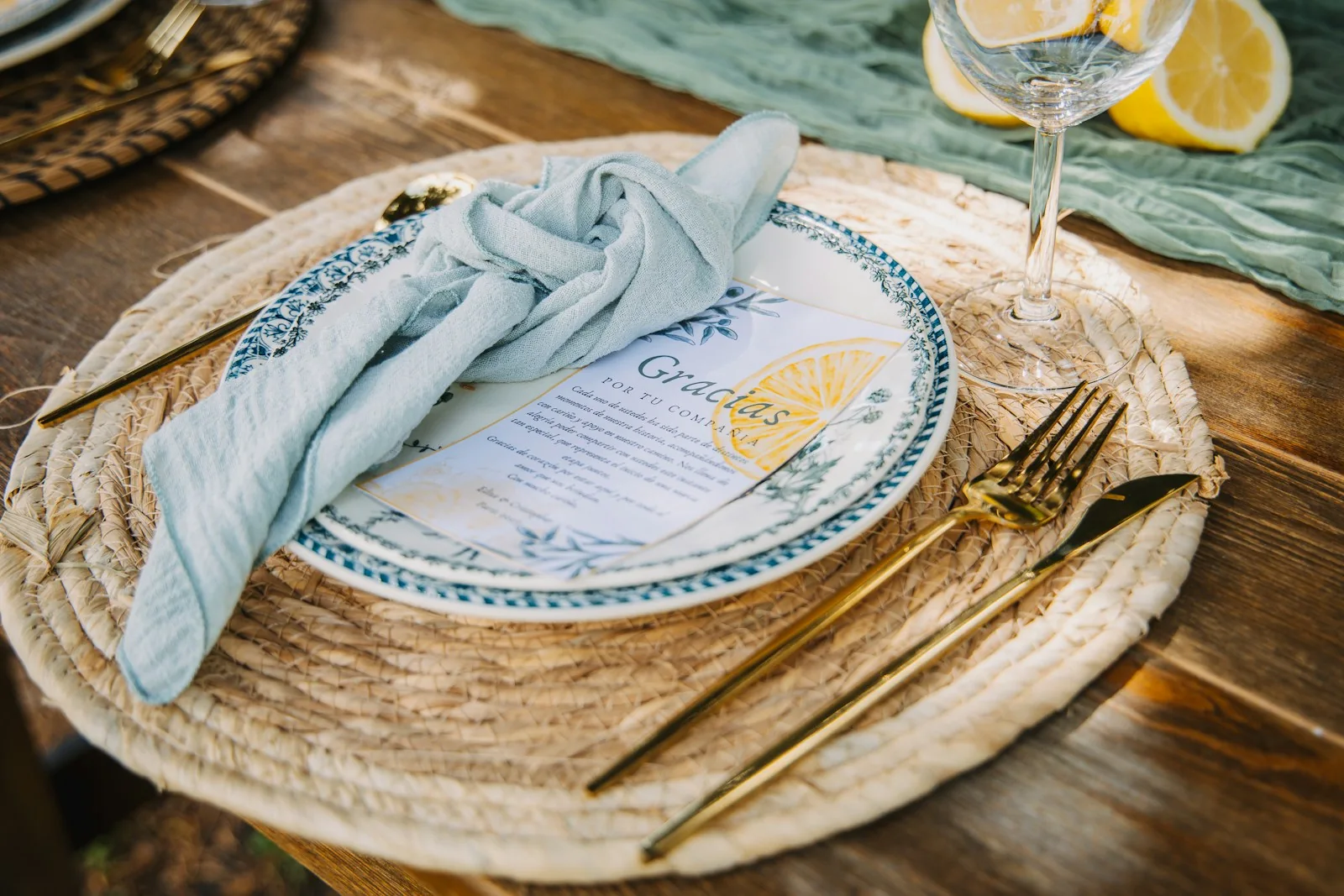
Illustrative photography. Images show editorial inspiration, rather than a product or recipe test.
Let the plate show its pattern
A patterned plate already supplies several colours and shapes. Begin with one retained plate on the table you actually use, then place a plain napkin beside it. This shows whether the cloth gives the pattern a quiet boundary or introduces a competing tone.
Use the ordinary setting rather than a tightly cropped product photograph. The table surface, cutlery and drinking vessel all influence the complete view. Keep them present in their real roles before deciding that the napkin needs a stronger decorative detail.
Choose one colour relationship
You can echo a small colour from the plate or use a distinct neutral that leaves the pattern readable. Neither approach requires an exact match. A slightly different tone may feel soft and deliberate, while another may look unexpectedly unrelated beside the same ceramic.
Compare the actual retained textiles in consistent light. A screen image cannot establish a subtle fabric match. If you are considering a purchase, use a physical sample where available and keep its exact product identity with the comparison.
Include texture without adding pattern
A plain napkin may still have a visible weave, a border or a change in sheen. Look from the seated position and across the room. Fine texture can disappear at a distance, leaving colour as the main contribution, while a broad woven structure remains noticeable.
If the plate's pattern is already elaborate, a quieter textile may give it more room. Try the simplest retained option before adding a second print. The goal is to see what each surface does, not to collect several coordinating patterns because they share one colour.
Keep the meal's needs visible
Choose a napkin suitable for its intended use and care routine. A pleasing fold does not establish that an unfamiliar textile is appropriate for food-contact service. Use the actual material information, and complete its required care before placing it in the ready table group.
Keep the ordinary place setting usable. A decorative arrangement that covers the whole plate or takes several steps to dismantle may not suit an everyday meal. Compare the napkin in a simple position you can repeat without making table preparation a separate project.
When you choose a pairing, record the plate and napkin identities rather than a vague instruction to buy matching blue or cream. Leave the retained tableware in place and add only what the next meal genuinely needs. One clear relationship can make mixed pieces feel settled without turning the table into a complete replacement set. If the simplest napkin works, keep it as a useful reference for later additions.
Try a quiet napkin beside the plate, then substitute a retained cloth that echoes one small part of the pattern. Keep the plate and glass unchanged. Ask which version makes the plate easier to read from the chair, rather than which textile looks most attractive folded on its own.
Related reading
A Simple Table for Everyday Guests, Decide Whether Napkin Rings Serve Your Everyday Table.
This story belongs to our February 2023 editorial issue. Publication and update dates follow the journal’s monthly editorial calendar. Our guidance is based on editorial research and practical planning, not an undisclosed hands-on product test.