Check the Sieve and Bowl Rim Together
By Love Coma Cakes Editorial · Published May 1, 2024 · Updated May 1, 2024
A sieve may appear to sit comfortably on a bowl until its handle or support moves during the actual task. Compare the specific products before baking. The.
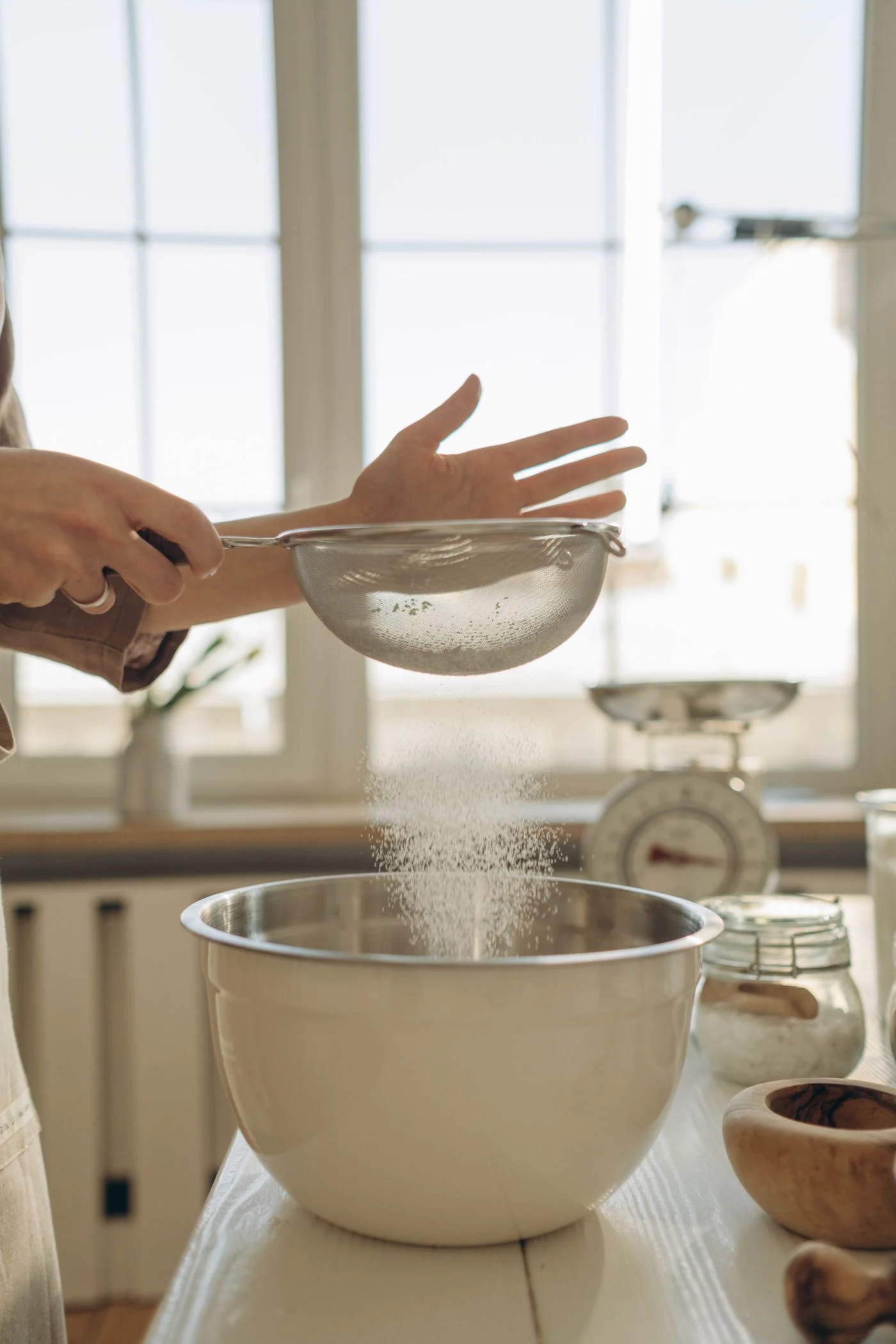
Illustrative photography. Images show editorial inspiration, rather than a product or recipe test.
Compare the pair before the recipe starts
A sieve may appear to sit comfortably on a bowl until its handle or support moves during the actual task. Compare the specific products before baking. The bowl's outer diameter and the sieve's advertised width do not describe every contact point.
Read the actual equipment and recipe guidance. This is a fit check, not a universal instruction for sifting every ingredient or using a sieve in a way its manufacturer has not intended.
Identify the permitted support points
Look at the actual handle, hooks or rim supports described by the product information. Check their relationship with the bowl's complete edge. A deep lip, narrow neck or curved rim may change whether the intended arrangement is appropriate.
Do not balance equipment on improvised objects to make a near fit work. Resolve uncertainty through reliable product information or choose another suitable pair. The photograph on a package cannot establish compatibility with every bowl in the cupboard.
Include the receiving space
Check the actual bowl's suitable capacity and the recipe method. The receiving area needs to serve the task as well as physically support the tool where permitted. A smaller bowl may fit the sieve while remaining unsuitable for the intended ingredient group.
Our bowl and spatula guide considers a different equipment relationship. Keep each tool's role clear. One familiar bowl need not be the universal answer to every mixing, measuring and receiving stage.
Consider manageable handling
Read the sieve's intended use and assess the actual person and task. A long handle or heavy frame can affect the appropriate arrangement. Do not choose a larger tool solely because it appears more substantial in a product photograph.
Our scales guide supports another recipe equipment decision. The method should remain grounded in the actual instructions rather than adjusting an ingredient process to justify a preferred tool.
Keep care and return practical
Follow actual cleaning, drying and storage requirements for both pieces. Keep items awaiting attention distinct from ready equipment. A mesh surface and a bowl finish may require different handling, even when they are used in the same task.
Our cupboard guide helps with suitable storage. Measure the sieve's complete stored shape, including projecting handles. A useful pair should work through appropriate preparation, care and retrieval rather than create another awkward object permanently resting on the counter.
Include the complete handle in the storage measurement.
Sieve and bowl questions
Does matching diameter establish fit? Check the actual support points, rim shape and intended use too.
Can a sieve rest on any bowl? Only where the specific products and guidance support the arrangement.
What if the tool is awkward to store? Review its complete stored footprint before buying another utensil container.
This story belongs to our May 2024 editorial issue. Publication and update dates follow the journal’s monthly editorial calendar. Our guidance is based on editorial research and practical planning, not an undisclosed hands-on product test.