Give Open Pantry Packages a Clear Working Position
By Love Coma Cakes Editorial · Published September 12, 2026 · Updated September 12, 2026
Keep ingredient labels visible and distinguish active packages from unopened replacements.
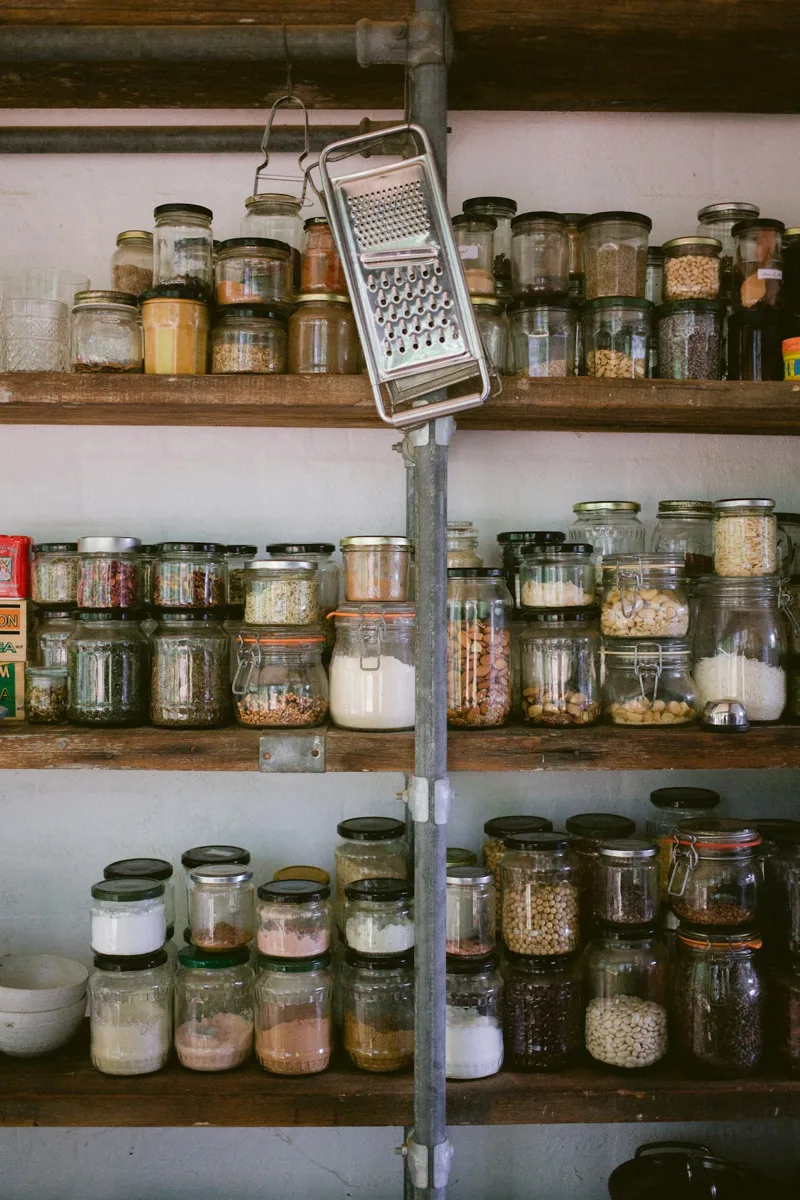
Illustrative photography. Images show editorial inspiration, rather than a product or recipe test.
Choose one recipe’s ingredients
Start with an ordinary recipe and collect its pantry ingredients. Notice which packages are difficult to find or distinguish. A cupboard improvement is easier to assess through a meal than through an abstract goal of making every shelf match.
Keep ingredients identifiable and follow their storage instructions, including any changes after opening. If a package is damaged or the food's suitability is uncertain, investigate that issue through reliable guidance before returning it to the active shelf.
Separate opened and replacement packages
Choose a clear working position for the package currently in use and a suitable separate position for unopened replacements. Keep labels readable. A small shallow box can group packets if it fits the shelf and makes retrieval easier.
Do not allow the storage container to hide product information. If decanting is useful, preserve the relevant identity, dates and directions with the contents. A clipped original package may require less maintenance than a jar whose label is never updated.
Test opening and measuring
Take the package out, measure an ingredient as the recipe directs and return it. Check whether the closure is appropriate and whether the next person can read what is inside. A shelf that looks organized while closed may still make cooking awkward.
Use suitable food-contact containers and tools where needed and follow their care instructions. Keep the actual recipe quantity and units clear. Our scale guide supports the measuring step without requiring every pantry item to be transferred into matching storage.
Make replacement shopping visible
When the active package is nearly finished, check the replacement position before adding it to the list. If the spare moves into use, update the list clearly. A small visible check can prevent repeated duplicate purchases.
Our shopping-list guide helps connect this task with actual meals. Keep occasional ingredients separate from the staples used frequently. Their storage requirements still matter, but they do not all need the easiest everyday position.
Review the shelf through use
After several ordinary meals, identify what repeatedly lands elsewhere. The category or shelf position may be inconvenient. Adjust that one point before buying another organizer. Keep the active collection manageable enough that labels remain visible.
The kitchen storage guide can help with dimensions. Choose containers after the packet shapes and return route are understood. A successful shelf makes correct ingredients easier to retrieve and put away while preserving useful information.
Pantry-package questions
Must every opened package go in a jar? No. Use the food's requirements and a practical suitable closure or container. Original packaging may preserve valuable information.
Should packages be grouped alphabetically? Choose a system the household understands during cooking. Frequent-use groups may work better for a small collection.
What if the shelf is immediately full again? Check duplicates, occasional products and the actual categories before adding more storage. Extra volume can hide the same retrieval problem.
This story belongs to our September 2026 editorial issue. Publication and update dates follow the journal’s monthly editorial calendar. Our guidance is based on editorial research and practical planning, not an undisclosed hands-on product test.