A Slow Saturday Breakfast Without a Sink Full of Dishes
By Love Coma Cakes Editorial · May 1, 2026 journal issue · Published October 10, 2026
Plan a generous breakfast for two with one skillet, a simple shopping list and a realistic order of work.
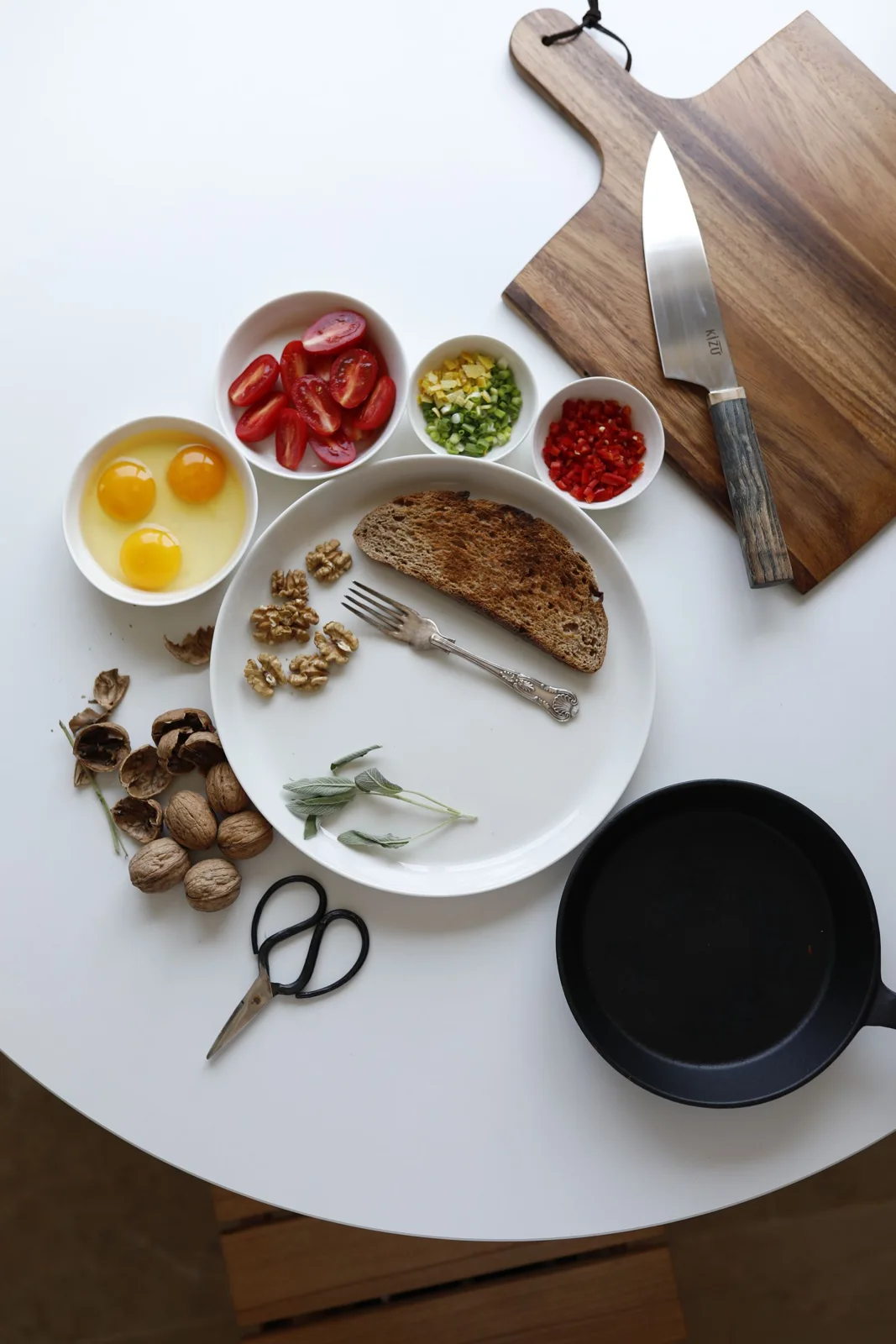
Illustrative photography by Selma Nigar Baştürk / Pexels. Images show editorial inspiration, rather than a product or recipe test.
Saturday breakfast often begins with a lovely idea and ends with three pans competing for the same burner. Eggs, toast, coffee and something fresh are enough for a satisfying meal. The useful question is how to make those parts arrive together without turning breakfast into a project.
Our buying advice is research-led. Links may take you to retailers; any paid relationship is identified beside the link. See our affiliate disclosure.
This plan serves two people. It uses a skillet, a toaster or grill, two plates and a chopping board. It suits a morning when there is time to sit down, but no particular desire to spend the next hour washing up. Think of it as a flexible sequence rather than a recipe that needs exact ingredients.
Decide what breakfast needs to do
Start with the people at the table. Someone heading out for a long walk may want a more substantial plate than someone planning a late lunch. Four eggs and four slices of bread make a useful starting point for two adults; adjust those amounts to appetite. Add a vegetable you already enjoy and fruit that needs little preparation.
A sample shopping list is four eggs, four slices of bread, a small pack of mushrooms, two tomatoes and two pieces of fruit. Butter or cooking oil, salt and a preferred seasoning complete the cooking ingredients. There is no need to buy mushrooms and tomatoes if one is already available. A generous portion of one vegetable can be more appealing than tiny portions of several.
Choose one cooked centerpiece. Scrambled eggs are forgiving when everyone is ready to eat together. Fried eggs require a little more attention at the final moment. A simple vegetable omelet puts almost everything in the same pan, although turning or folding it may feel less relaxed if it is unfamiliar.
Set the table before turning on the heat
Fill the kettle, put cups beside it and place plates and cutlery on the table. Set out jam or any other spread now. Clear a landing space for the hot skillet and a separate place for the chopping board. These small decisions remove the need to rummage through cupboards while food is cooking.
Wash and prepare the produce, then put scraps straight into the appropriate bin. Slice mushrooms evenly so that pieces cook at a similar pace. Cut tomatoes into wedges rather than elaborate slices. Put whole fruit on the table, or cut it immediately before serving if that is how your household likes it.
The chopping board can then be washed and put away before the busiest part of cooking. Fewer objects on the counter make a small kitchen feel considerably calmer.
Cook in a useful order
Cook the vegetables first, following the instructions for the pan and the method you normally use. Mushrooms need enough room for moisture to evaporate; a crowded little pan creates a different result from a spacious one. Move the vegetables to the plates when they are cooked to your preference.
Start the toast shortly before the eggs. If the toaster holds only two slices, make the first round for the person who prefers cooler toast, or choose two larger slices rather than four smaller ones. Trying to keep an oversized batch perfect can become the most complicated part of an otherwise easy meal.
Cook the eggs last and serve promptly, using a familiar method appropriate for the people eating. Make coffee or tea while the toast is running if your equipment allows it comfortably. If there is only one person cooking, asking the other person to handle drinks is a useful division of work.
Leave the pan somewhere stable to cool according to its care instructions. The breakfast table is the priority; washing a hot pan immediately is unnecessary.
Buy a skillet for the breakfast you actually make
A skillet around 24–26 cm across can be a practical size for many two-person breakfasts, but the base diameter and your hob matter as much as the label. Check whether four eggs would fit comfortably and whether the handle leaves room beside the kettle. A much larger pan may be awkward to wash in a compact sink.
Nonstick cookware can suit eggs and straightforward cleanup, provided its care requirements fit your routine. Stainless steel asks for more attention to heat and technique but is useful across many meals. Cast iron is substantial and holds heat, with a weight and maintenance routine that deserve consideration before buying.
Lift a prospective pan if shopping in person. Imagine moving it when it contains food, then imagine washing it. Check hob compatibility, oven limits if relevant, and whether replacement lids are available. These details matter more than a long list of marketing features.
Keep the finishing touches modest
A cloth napkin, fruit bowl and clear table can make breakfast feel special without a separate shopping trip. Use existing plates; mixed ceramics can look perfectly comfortable together. Put spreads in their original jars if decanting would merely add washing up.
For more ordinary-meal planning, browse Everyday Food or use the component approach in our weeknight grain bowl guide. Both start with the same principle: choose the amount of cooking that suits the day.
Frequently asked questions
Can this work for four people?
Yes, but the skillet and toaster may become bottlenecks. A breakfast centered on one larger dish or a mix of cooked and uncooked items can be easier than doubling every individual portion. Check your chosen recipe and cookware capacity before committing.
Is a matching breakfast set worth buying?
Only if you need the pieces and have room for them. Two comfortable mugs and plates you already like offer more daily value than a coordinated set with items that remain in the cupboard.
What should be prepared the night before?
Set out dry tableware, decide the menu and check ingredients. Follow suitable guidance for any food preparation or storage; the main time saving here comes from removing decisions, not leaving prepared food on the counter.
This story belongs to our May 2026 editorial issue. This edition was published and reviewed on October 10, 2026. Our guidance is based on editorial research and practical planning, not an undisclosed hands-on product test.